Task
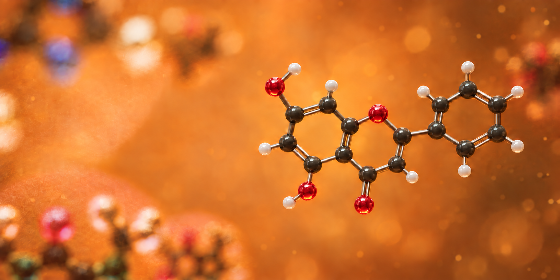
Use LC-MS/MS tandem mass spectra to predict the 2D chemical structure (SMILES) of small molecules, both known molecules and entirely new ones. The molecules are similar to those in plant, mammalian, and microbial samples: confirmed or predicted natural products, natural product analogs, and synthetic molecules that may occur in nature.
A single molecule may have multiple spectra measured at different collision energies and different adducts. Predictions are evaluated per molecule, not per spectrum, so combine all spectra for the same molecule and submit up to 25 candidate structures, with the most confident first. The competition site says no chemistry background is required, but some familiarity with mass spectrometry basics helps.
Data
- train.parquet: about 2.5 million MS/MS spectra covering about 275,000 distinct structures, with structure labels; file size about 3 GB. Most are aggregated from 11 spectral libraries including Enveda, MSnLib, RIKEN, GNPS, and MassBank, with varying instruments and preprocessing.
- Within it, enveda-np-examples consists of 250 common natural products measured with the same instrument and processing pipeline as the test set, making it the closest to the test set.
- test.parquet: the version you see is a sample from the training set; when rerun it is replaced by the hidden test set of about 400 molecules and about 1,500 spectra, with 1 to 16 spectra per molecule (median 3), all measured on a Bruker timsTOF, with monoisotopic masses from 157 to 1,159 Da.
- Test molecules fall into three increasingly difficult categories: those with reference spectra in public libraries; structures in PubChem or COCONUT but without public spectra; and entirely new structures not in PubChem. The proportions of each category are not disclosed during the competition.
- Competition data are under CC BY-NC 4.0, for non-commercial use only. The official site also lists available tools and external data such as SIRIUS, MIST-CF, matchms, and DreaMS.
Prizes
Total prize pool $50,000: 1st place $16,000, 2nd place $12,000, 3rd place $9,000, 4th place $7,000, 5th place $6,000.
Judging
- The metric is MRR@25: for each molecule, look at the rank of the first correct structure in your list and score 1/rank; rank 1 gives 1, rank 2 gives 0.5, rank 25 gives 0.04, and if none of the 25 are correct the score is 0; average over all molecules.
- Each molecule has only one correct answer, and only the position of the first correct guess counts. Incorrect candidates only occupy positions; no additional penalty is applied.
- Correctness check: your SMILES and the answer are both canonically tautomer-normalized by RDKit (version 2026.03.3), and the first block of the InChIKey (InChIKey14) is compared, so stereochemistry and tautomer mistakes are not penalized.
What to submit
- Submissions are only through Kaggle Notebooks; CPU or GPU notebook runs cannot exceed 9 hours, no internet access, and the output file must be named submission.csv.
- The file has two columns: molecule_id and smiles. Each molecule_id appears exactly once; smiles contains up to 25 candidates separated by semicolons, with the most confident first; fewer than 25 is allowed. Missing columns, empty files, null values, duplicate molecule_id, or more than 25 candidates will be rejected.
- You can submit up to 5 times per day, and you can select up to 2 final submissions for judging.
- You may use free public external data and pretrained models. Paid data and tools must be at reasonable cost; for example, a small subscription like Gemini Advanced meets the reasonable standard, but buying a private dataset more expensive than the prize is not allowed.
- Winners must submit code, documentation, and running environment instructions that reproduce the results; code is open-sourced under the MIT license.
Notes
Registration and team merging close at 07:59 Beijing time (UTC+8) on December 8, 2026; if you have not accepted the rules by then, you cannot participate. Final submissions close at 07:59 Beijing time (UTC+8) on December 15.